AI Vending Machines: How They Work, Costs & Examples (2026)
Discover how AI vending machines work, their costs in 2026, key features, benefits, and real-world examples of AI-powered vending technology.
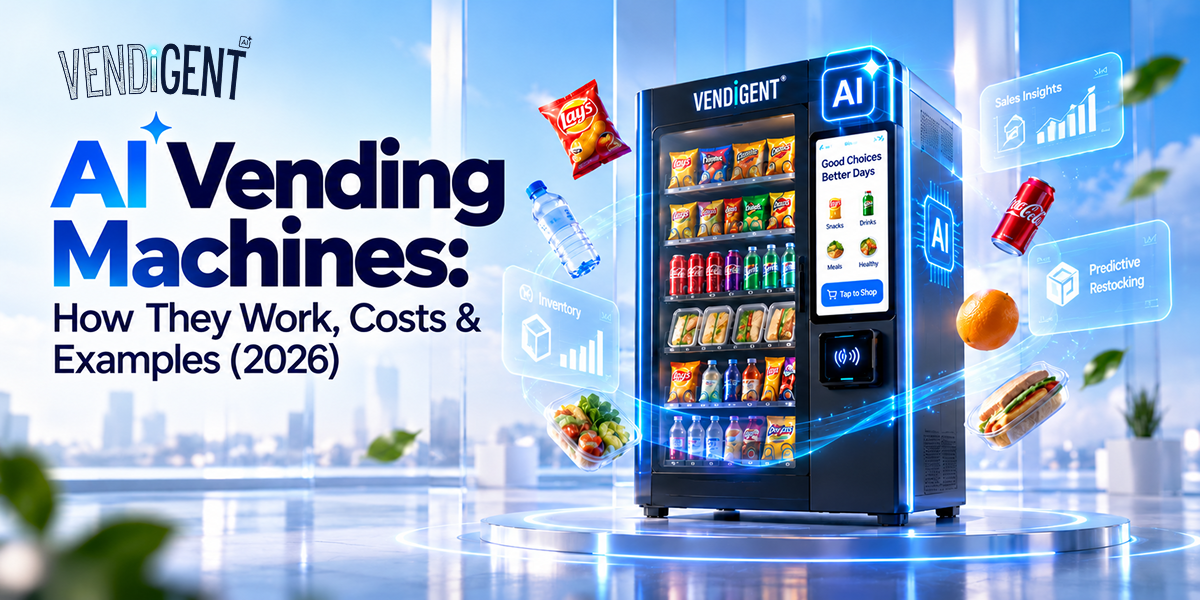
Vending machines are becoming more intelligent. Instead of simply dispensing products after a payment, modern machines can use artificial intelligence (AI), computer vision, sensors, IoT connectivity, and cloud software to automate transactions, track inventory, and provide real-time operational data.
AI vending machines are designed to make vending more automated and easier to manage, especially for businesses operating multiple machines or unmanned retail locations.
This guide covers how these intelligent vending systems work, the technology behind them, their costs in 2026, real-world examples, and the role of vending software in managing these systems.
What Are AI Vending Machines?
These automated retail machines use AI and connected technologies to improve product recognition, purchasing, inventory management, and machine monitoring.
Traditional vending machines typically rely on buttons, product selections, and payment systems. AI-enabled machines can add cameras, computer vision, sensors, RFID, touchscreens, and cloud connectivity to automate more of the customer and operator experience.
A typical AI vending setup can include:
- AI-based product recognition
- Cashless and contactless payments
- Real-time inventory tracking
- Remote machine monitoring
- Sales and transaction analytics
- Automated alerts
- Cloud-based management
The exact capabilities vary by machine and software platform.
How Do AI-Powered Vending Machines Work?
The system combines hardware, AI technology, payment systems, and software to process purchases and manage operations.
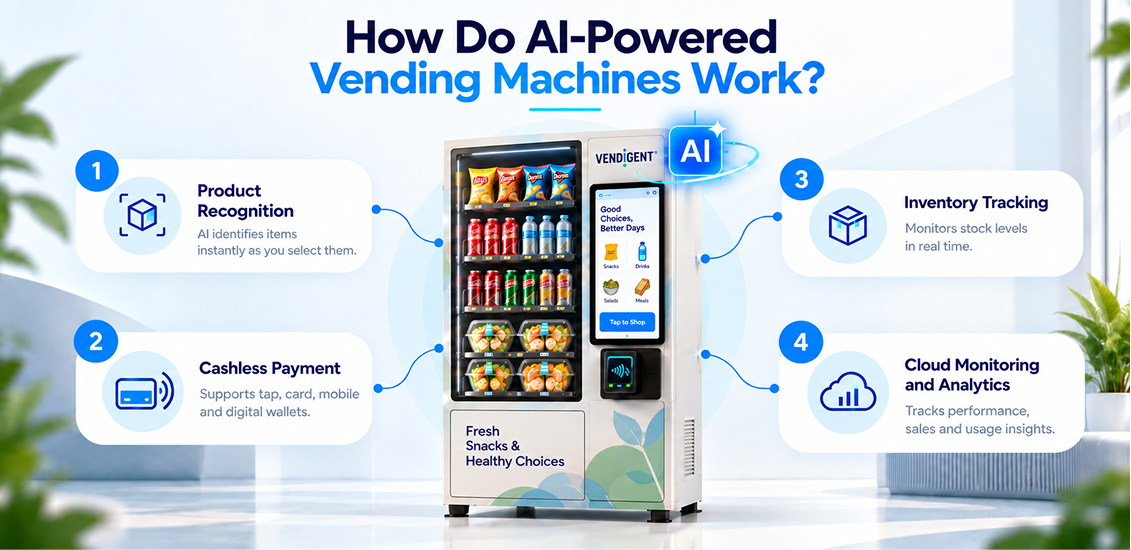
Product Recognition
Cameras, computer vision, RFID, and sensors identify products selected or removed by customers. AI technology detects customer interactions and calculates purchases automatically.
Cashless Payment
AI vending machines support credit and debit cards, NFC, mobile wallets, and QR payments. Payment systems connect transactions with selected products.
Inventory Tracking
Inventory updates automatically after each transaction, helping operators track sales, monitor stock levels, and identify replenishment needs.
Cloud Monitoring and Analytics
Cloud-based software allows operators to remotely monitor machine status, sales, inventory, transactions, and alerts through a centralized dashboard.
What Technology Do AI-Powered Vending Machines Use?
Several technologies work together to create an AI vending system.
Computer Vision and AI
Computer vision can identify products, detect customer interactions, and support automated purchasing in certain vending models.
IoT Sensors
IoT sensors can monitor machine conditions, inventory levels, temperature, door activity, and other operational data.
RFID and Weight Sensors
RFID tags and weight sensors can help identify products and detect inventory changes. The technology used depends on the machine design.
Cashless Payment Systems
Payment terminals allow customers to pay through cards, contactless methods, mobile wallets, and other supported options.
Cloud Connectivity
Internet connectivity allows vending machines to send data to a centralized platform for remote monitoring, reporting, software updates, and fleet management.
Smart Touchscreen Interfaces
Interactive touchscreens allow customers to browse products, view prices, make selections, and complete purchases through a user-friendly digital interface.
What Features Do AI Vending Machines Offer?
The exact feature set depends on the hardware and software, but common capabilities include:
- AI product recognition
- Cashless payments
- Real-time inventory tracking
- Remote machine monitoring
- Sales and transaction tracking
- Low-stock alerts
- Machine status alerts
- Analytics and reporting
- Demand forecasting
- Multi-machine management
These features help operators move from manually checking individual machines to managing vending operations through a centralized system.
How Much Does an AI Vending Machine Cost in 2026?
There is no single price for an AI-powered vending system. Cost depends on the machine type, AI capabilities, payment technology, software, sensors, connectivity, and installation requirements.
The main cost components include:
| Cost Component | What Affects the Cost |
|---|---|
| Machine Hardware | Size, capacity, cooling, and configuration |
| AI Hardware | Cameras, sensors, and computing hardware |
| Payment System | Card, NFC, QR, and payment terminal |
| Software | Management, inventory, analytics, and monitoring |
| Connectivity | Wi-Fi, cellular, or other IoT connectivity |
| Installation | Delivery, setup, and configuration |
| Ongoing Costs | Software, payment processing, connectivity, and maintenance |
Basic connected vending machines can cost considerably less than advanced AI systems with computer vision, smart coolers, or sophisticated automation.
For this reason, businesses should compare the total cost of ownership, not only the machine's purchase price.
What Is AI Vending Machine Software?
Vending machine software is the digital layer that connects the machine's hardware, payment systems, inventory, customers, and business operations.
Instead of managing each machine manually, operators can use software to control and monitor vending operations from a centralized dashboard.
Machine Management
Operators can monitor machine status, connectivity, errors, and other operational information remotely.
Inventory and Product Management
The software tracks products, stock levels, sales, and replenishment requirements across machines.
Sales and Payment Management
Transactions can be recorded and connected with payment providers to give operators a centralized view of sales.
Remote Monitoring
Businesses can monitor multiple machines without physically visiting each location.
Alerts and Notifications
The system can notify operators about low inventory, machine issues, connectivity problems, or other events.
Analytics and Reporting
Sales, inventory, product performance, and machine data can be turned into reports that help operators understand business performance.
Multi-Machine Management
For larger vending operations, software can provide a centralized dashboard for managing multiple machines and locations.
Route Planning and Scheduling
Vending software can help operators plan restocking routes, schedule maintenance visits, and manage servicing activities more efficiently.
AI Vending Solutions: What Does a Complete System Include?
An AI vending solution is more than the physical machine.
A complete setup can connect:
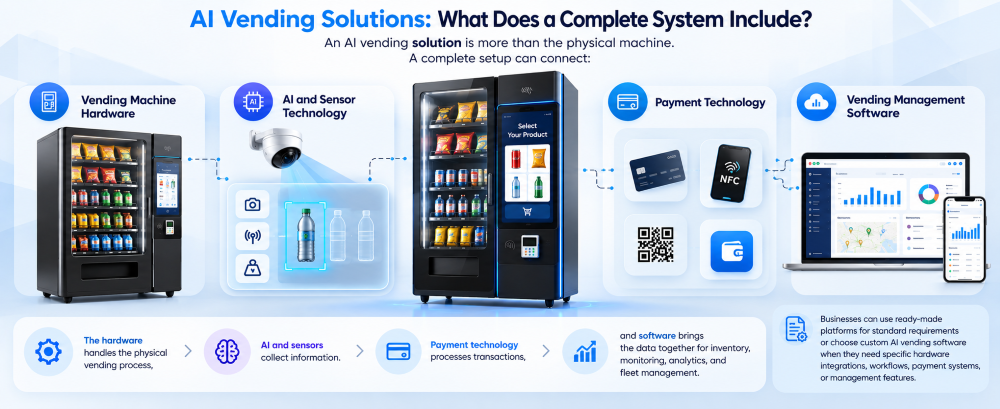
The hardware handles the physical vending process, while AI and sensors collect information. Payment technology processes transactions, and software brings the data together for inventory, monitoring, analytics, and fleet management.
Businesses can use ready-made platforms for standard requirements or choose custom AI vending software when they need specific hardware integrations, workflows, payment systems, or management features.
Examples of AI-Powered Vending Machines
AI vending technology can be used across different automated retail formats.
AI Smart Coolers
Smart coolers use cameras, sensors, payment technology, and software to allow customers to select products while the system automatically records the transaction.
Fresh Food Vending
AI and connected technology can support vending for meals, fresh food, and other products that require inventory and temperature monitoring.
Cashless Smart Vending
These machines focus on digital payments, connected inventory, remote monitoring, and centralized management.
Automated Micro Markets
Micro markets combine self-service retail with connected technology, allowing businesses to monitor products, transactions, and customer activity remotely.
Workplace and Office Vending
AI-enabled vending can provide automated access to food, drinks, and other products while giving operators better visibility into sales and inventory.
AI-Powered Beauty and Personal Care Vending
These machines offer automated access to beauty and personal care products, using smart technology for product recognition, cashless payments, and inventory tracking.
AI Vending Machines vs Smart Vending Machines
Smart and AI-powered machines are related, but they are not always the same.
| Feature | Smart Vending | AI Vending |
|---|---|---|
| Internet Connectivity | Yes | Yes |
| Remote Monitoring | Yes | Yes |
| Inventory Tracking | Yes | Yes |
| Product Recognition | Limited/Varies | AI-enabled |
| Predictive Analytics | Limited | More advanced |
| Automated Decisions | Limited | AI-driven |
In simple terms, smart vending focuses on connectivity, monitoring, and automation, while AI vending adds AI-based recognition, analysis, or decision-making.
What Are the Benefits of AI Vending Machines?
These systems can provide several operational benefits for businesses.
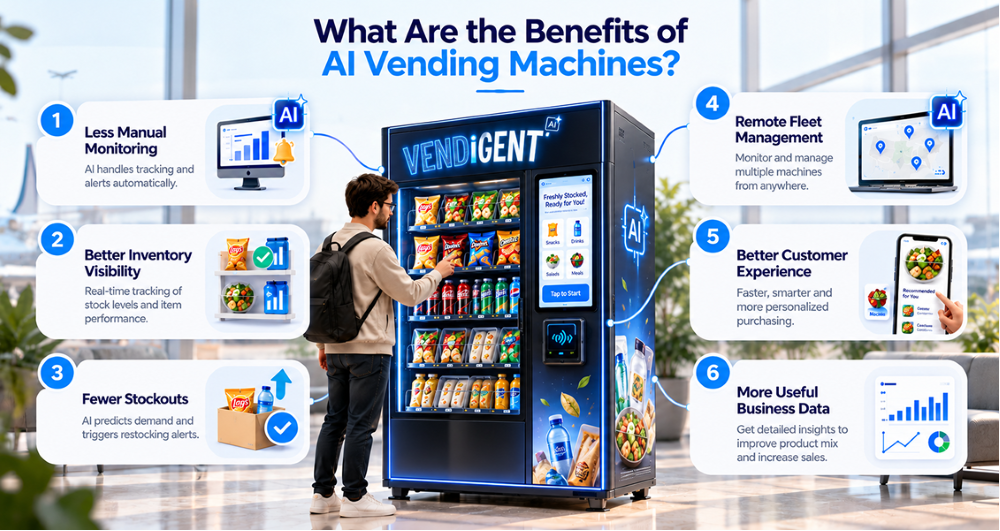
Less Manual Monitoring
Operators can monitor machines remotely instead of checking every machine as frequently.
Better Inventory Visibility
Connected inventory data helps operators identify stock levels and replenishment requirements.
Fewer Stockouts
Real-time inventory information can help businesses respond to low-stock products faster.
Remote Fleet Management
Multiple machines and locations can be monitored through a centralized software platform.
Better Customer Experience
Cashless payments, interactive interfaces, and faster purchasing can make self-service more convenient.
More Useful Business Data
Sales and machine data can help operators understand product performance, demand, and machine activity.
What Should You Consider Before Choosing an AI Vending Solution?
Before investing, evaluate the complete system rather than looking only at the machine.
Consider:
- 1Hardware compatibility: Does the software support your machine and peripherals?
- 2AI recognition: What technology does the system use for product identification?
- 3Payments: Which payment methods and providers are supported?
- 4Software: Does it include inventory, sales, monitoring, and analytics?
- 5Connectivity: Can machines reliably communicate with the platform?
- 6Scalability: Can the solution support additional machines and locations?
- 7Support: What maintenance and technical support are available?
- 8Total cost: What will hardware, software, connectivity, processing, and maintenance cost over time?
Frequently Asked Questions
How Much Does an AI Vending Machine Cost in 2026?
The cost varies based on machine type, AI hardware, payment systems, software, connectivity, and installation. Advanced computer-vision or smart-cooler systems generally require more investment than basic connected vending machines.
Can AI Vending Software Manage Multiple Machines?
Yes. Fleet management software can connect multiple machines and locations to one dashboard, allowing operators to monitor inventory, sales, machine status, and alerts centrally.
What Are AI-Powered Vending Solutions?
AI-powered vending solutions combine intelligent hardware, AI capabilities, payment systems, connectivity, and software to automate vending operations and support remote management.
Can Existing Vending Machines Be Upgraded With AI Technology?
Some existing vending machines can be upgraded with AI-enabled software, sensors, cashless payment systems, and IoT connectivity. However, compatibility depends on the machine's hardware, controller, and integration capabilities.
Looking for the Right AI Vending Solution for Your Business?
Every vending business has different needs. Whether you're planning a new setup or upgrading existing machines, let's discuss the technology, software, and features that fit your business goals.